The next deposit dispute is coming, and right now you cannot prove your side.
Your photos show the damage. They do not show what it should cost, and the deposit scheme will not guess. Clerke turns those photos into a claim. Every line has a price and a source. So the next dispute is one you can win.
No account. Nothing to install. It takes two minutes.
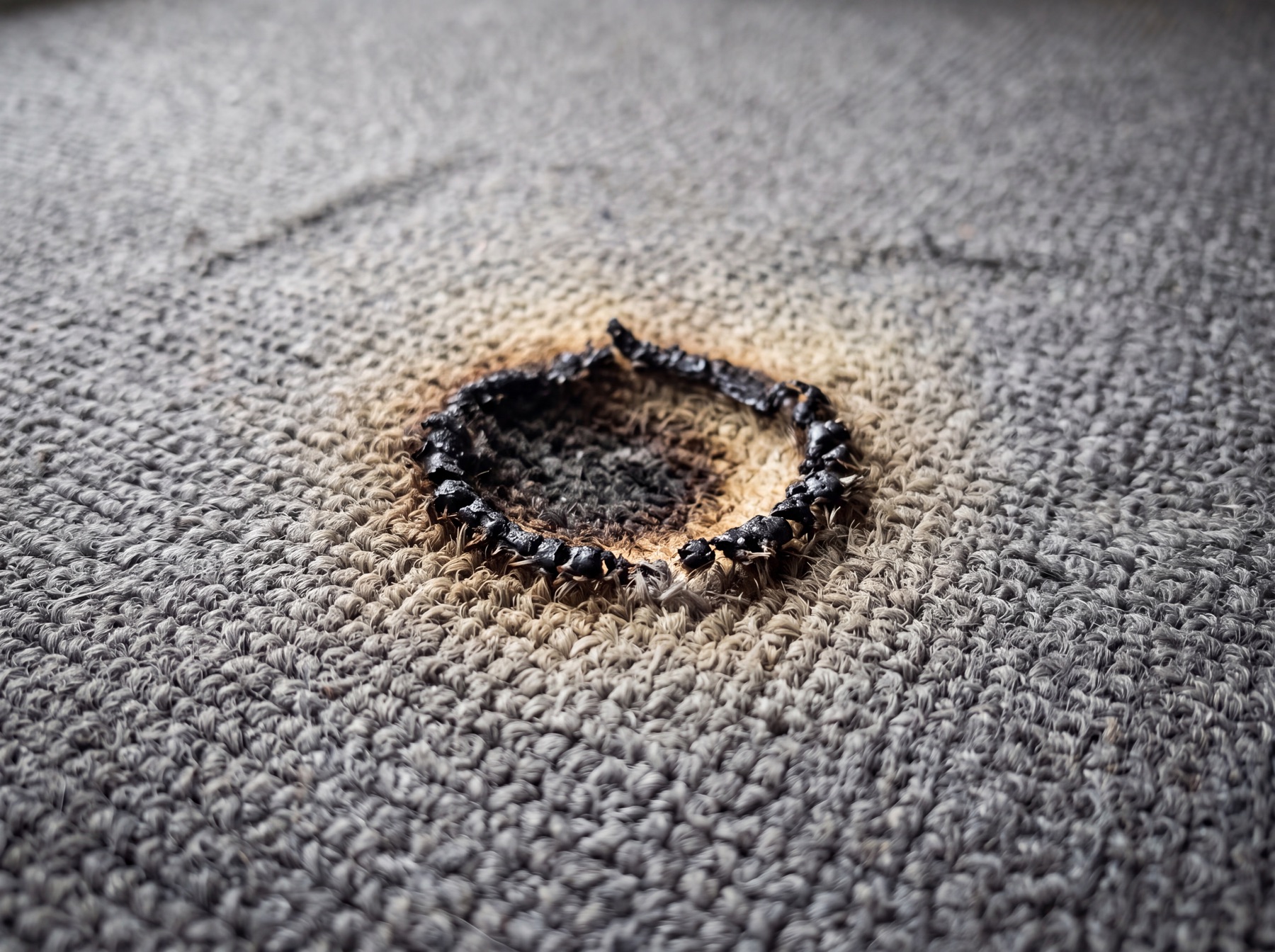 Living room · check-out
Living room carpet
Cigarette burn, 40mm. Not there at check-in.
Every number shows where it came from. An adjudicator can check each one.
You do the work. You still lose the money.
A deposit claim is judged on what you wrote down that day. Get it wrong and the landlord loses money, and you lose the landlord.
Every check-out is an afternoon you do not get back.
Ninety minutes at the flat. Two hours typing it up. Then you price the damage with a calculator and a guess. That afternoon did not go on a viewing, a landlord, or a new let. And if the tenant fights the number, you have nothing to back it up.
And it is the fourth one this week.

The clerk's report says what the room looked like. Not what it costs.
You pay a clerk £100 to £250 a report. It tells you what the room looked like. It does not say what the damage should cost, how old the carpet was, or what share is fair. So the claim goes in with a guess on it. The adjudicator throws the guess out.
You paid twice. Once for the clerk. Once for the claim you lost.

The landlord pays for the carpet now. Maybe he gets it back in April.
When a tenant fights a claim, the deposit stays locked with the scheme. That can take weeks, sometimes months. The flat still needs the carpet and the door fixed before the next tenant moves in. So the landlord pays for it himself and waits. Every week he rings you to ask where his money is. Every week the answer is the same.
If the claim then comes back cut, he paid for the repair and lost the deposit too.
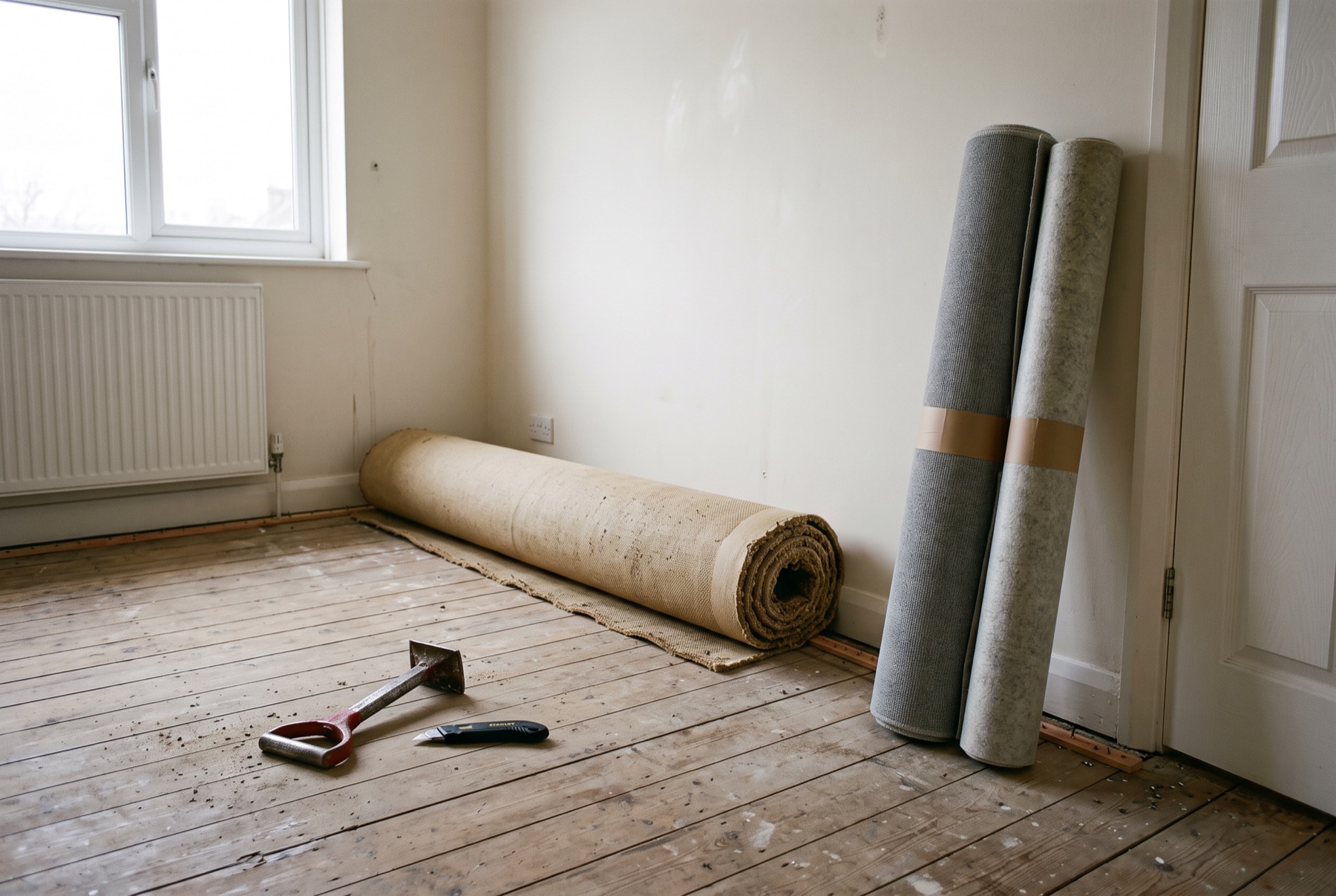
You lose on the number, not the damage.
Almost every dispute is about cleaning, damage or decoration. Each one comes down to a number: what it costs, how old it was, and how much of that is fair to charge. Nobody writes that down. So the adjudicator has to guess, and the guess goes to the tenant.
TDS, 46,950 adjudications, England and Wales, 2024/25.
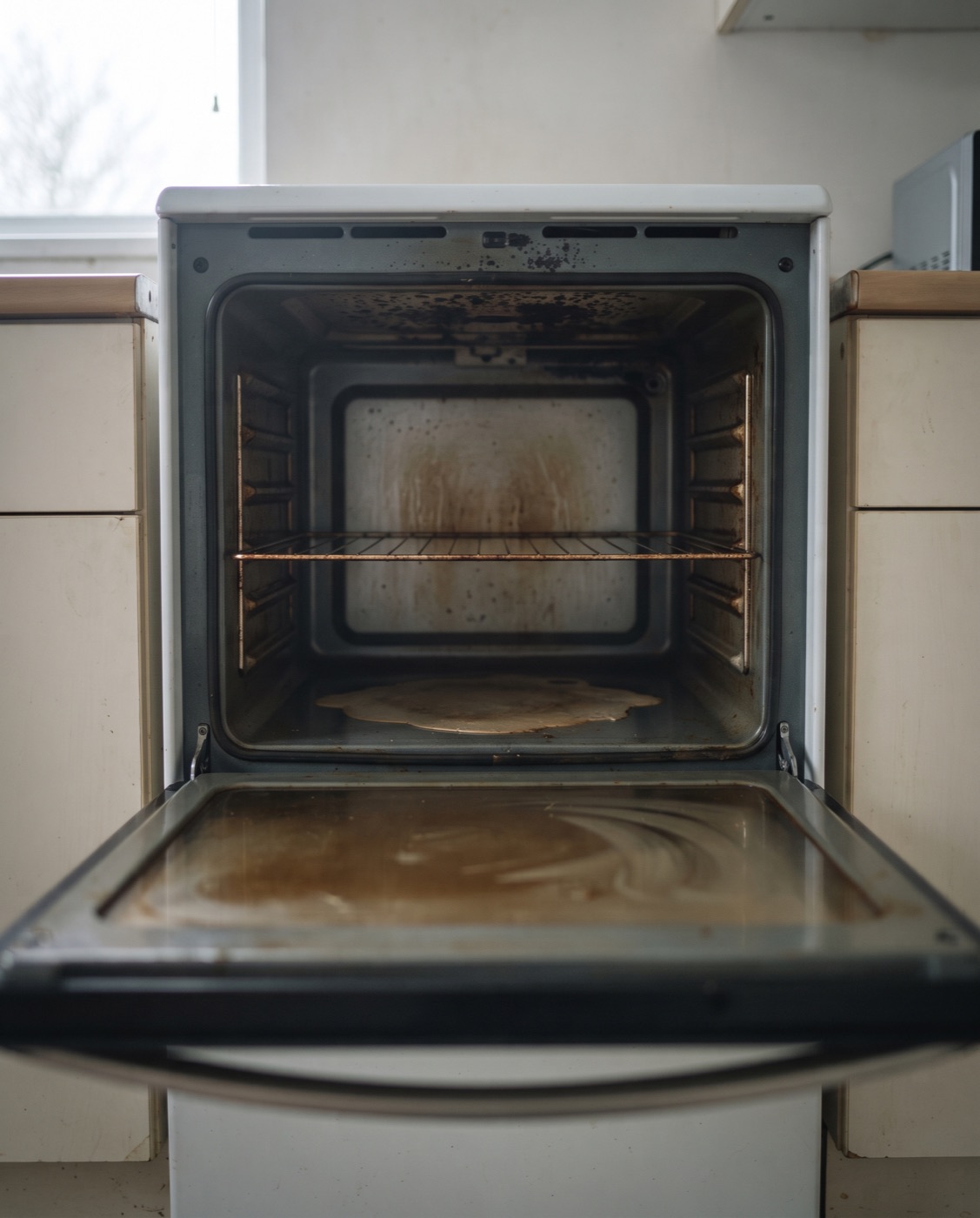
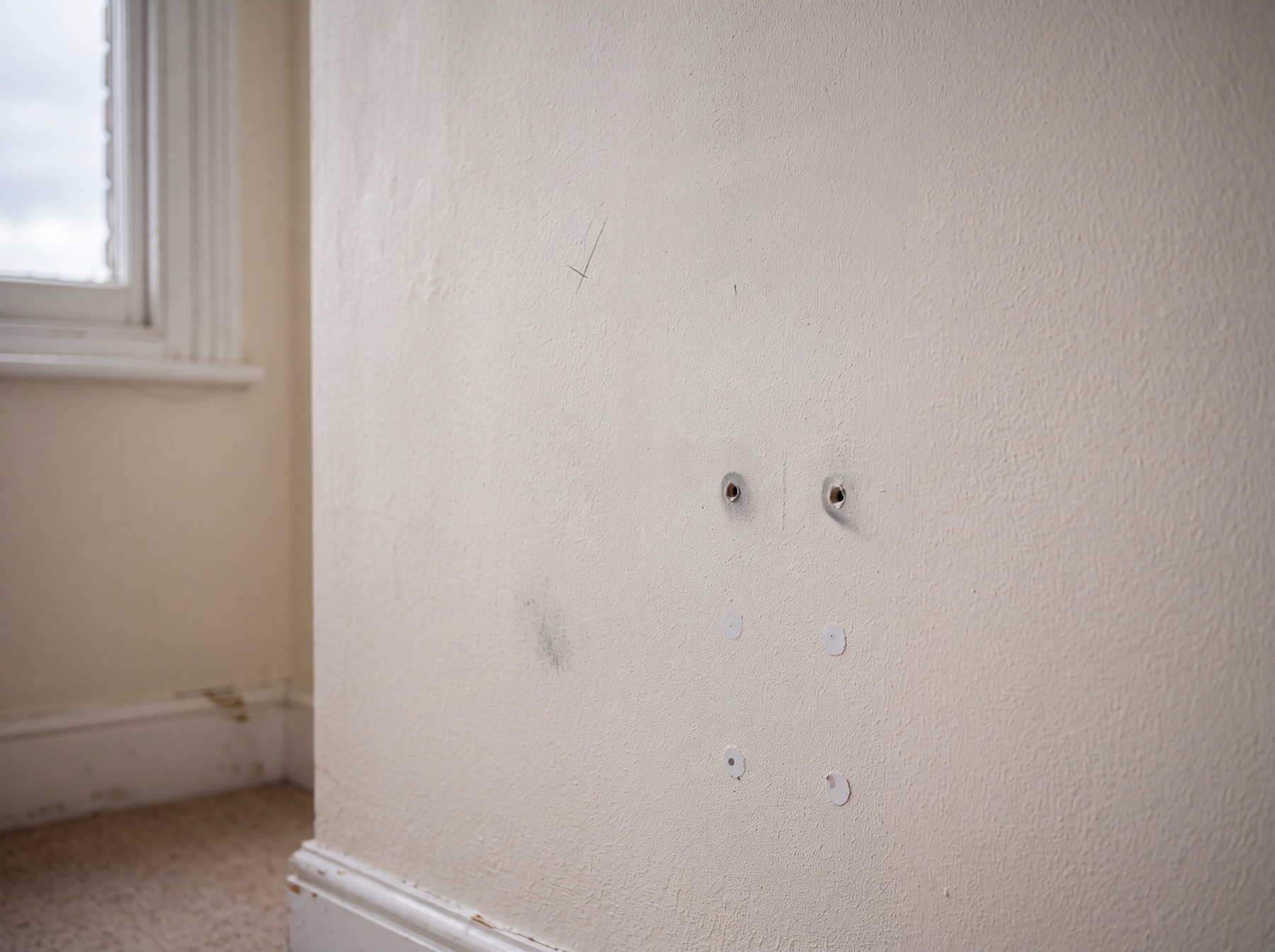
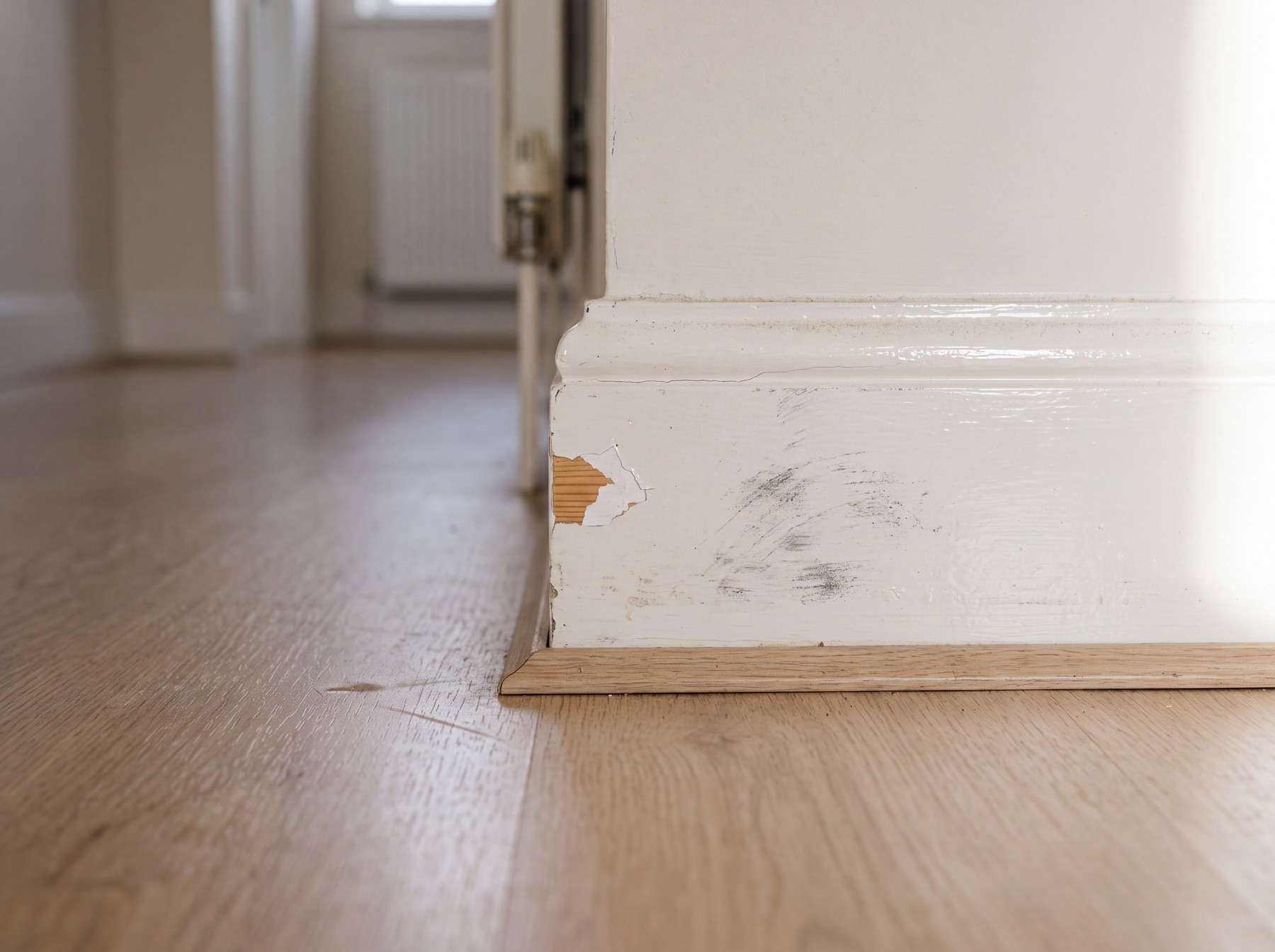
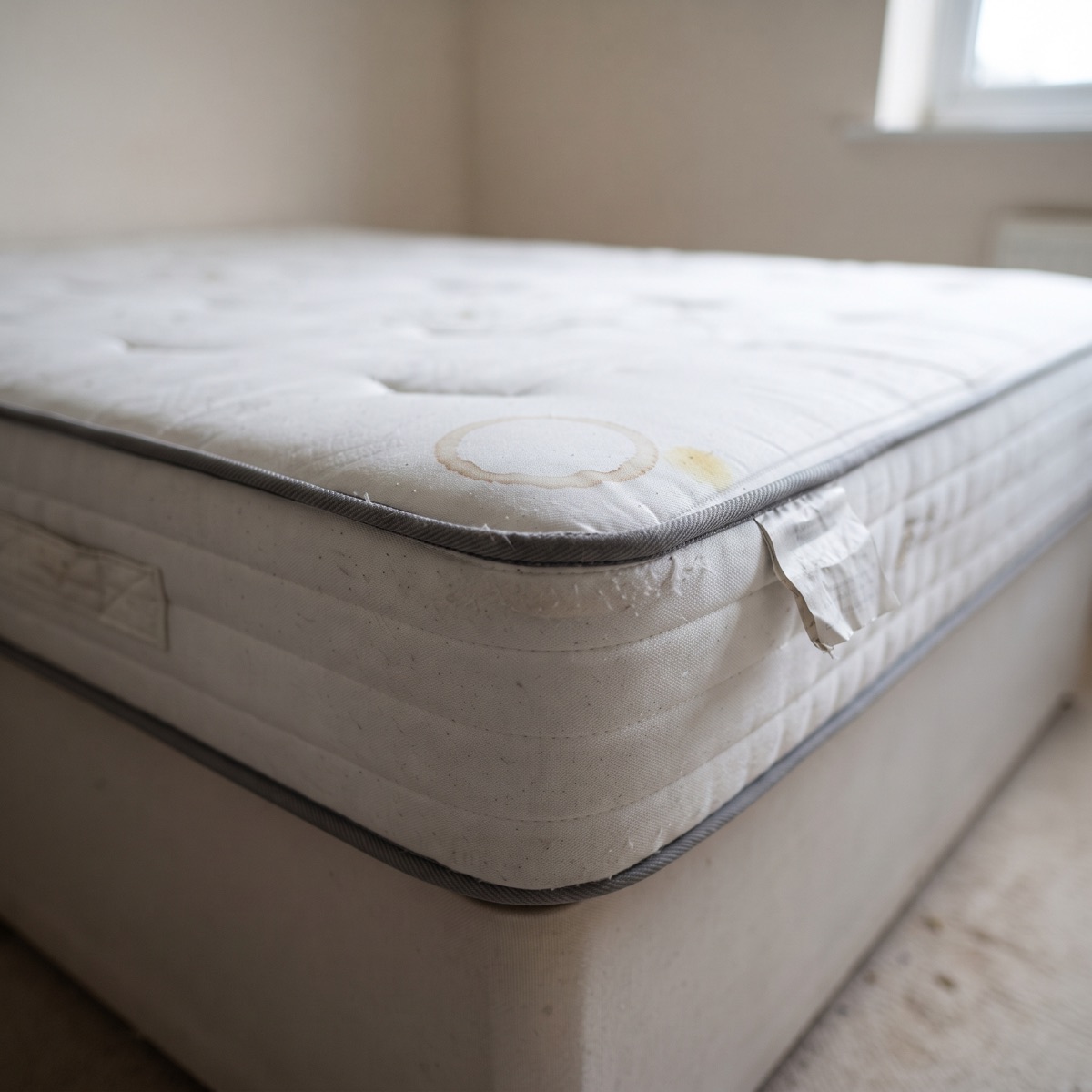

The damage is easy to see. This part was fine.
This is what losing looks like, even when you did the check-out right.
| Item | Charge | Source | Age |
|---|---|---|---|
| Carpet, living room | £385 | None | Not stated |
| Walls, repaint | £220 | None | Not stated |
| Skirting, repair | £90 | None | Not stated |
| Cleaning | £180 | None | Not stated |
A price on every line. Nothing behind any of them. This is what lost.
A real case. The tenant left the flat damaged. The agent had the photos to prove it. The claim went in as a list: an item, a price, an item, a price. No quotes. No age. No share for wear. The adjudicator said it was a claim, not proof. The tenant got the deposit back.
The damage was real. The photos were real. The landlord got nothing.
A price with nothing behind it is a guess. Clerke puts a source, an age and a fair share on every line.
Reported in Property Industry Eye.
Clerke is what sits between your photos and your claim.
You drop in the check-in and the check-out photos. Clerke reads every room and finds what changed, then splits tenant damage from fair wear.
It puts a price on each item, with a source behind it, and takes the age off so nothing is charged as new. Then it writes the document you send.
You check every step. You can change any line, and every change is saved with your name on it.
From photos to finished document, the whole job runs about three times faster.
It runs in four stages, and Clerke never decides on its own.
You are in charge of all four. Nothing moves on until you say so.
It moves on its own. Click any stage to stop it and stay there.
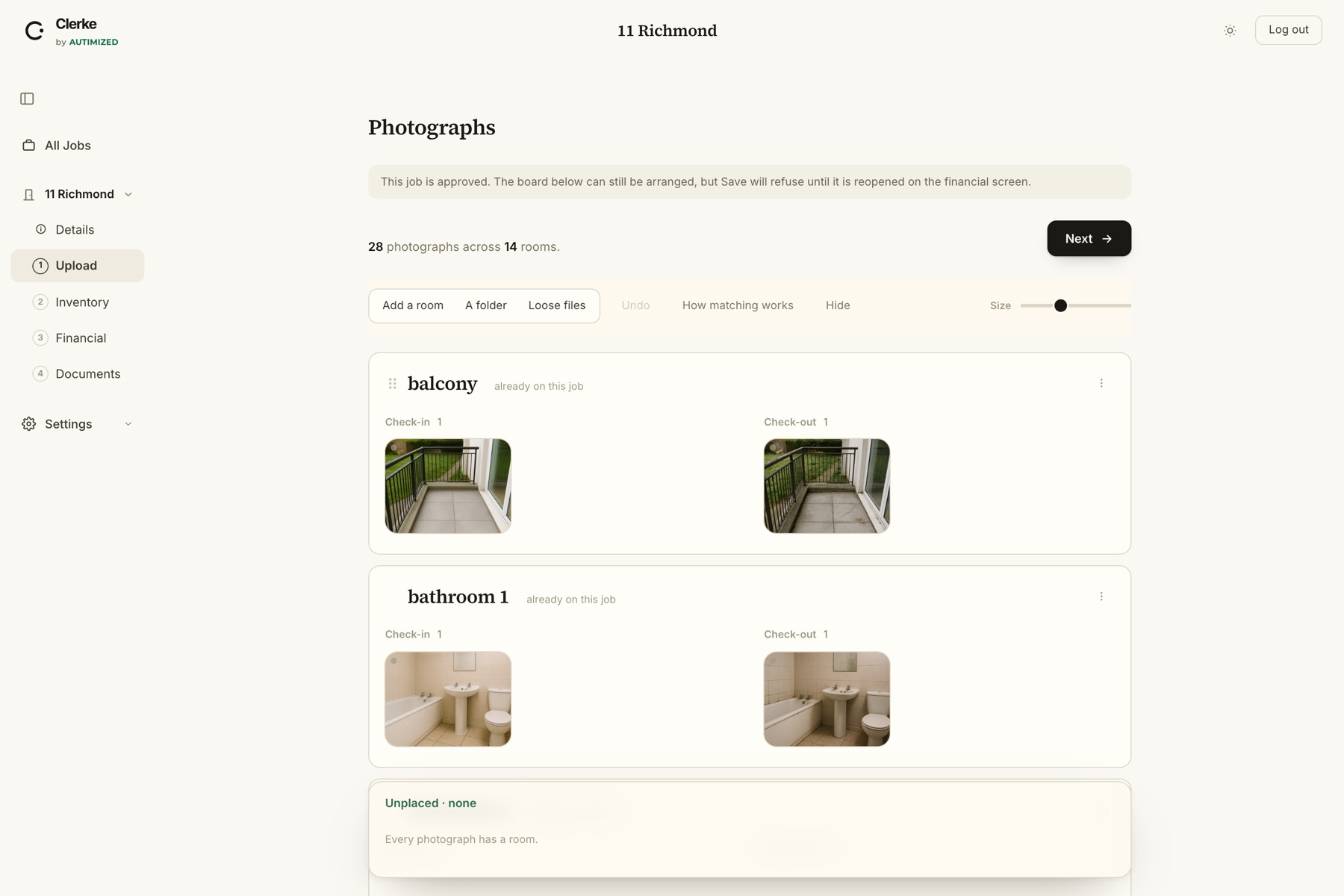
Drop the whole folder in.
Drop in the whole folder. Clerke looks at each photo and works out which room it came from. It then puts the check-in shot next to the check-out shot of the same spot. It goes by what is in the picture, so file names like IMG_4471 are fine. Drag anything that landed in the wrong room.
The other way is naming four hundred files by hand. Nobody talks about that part of the job.
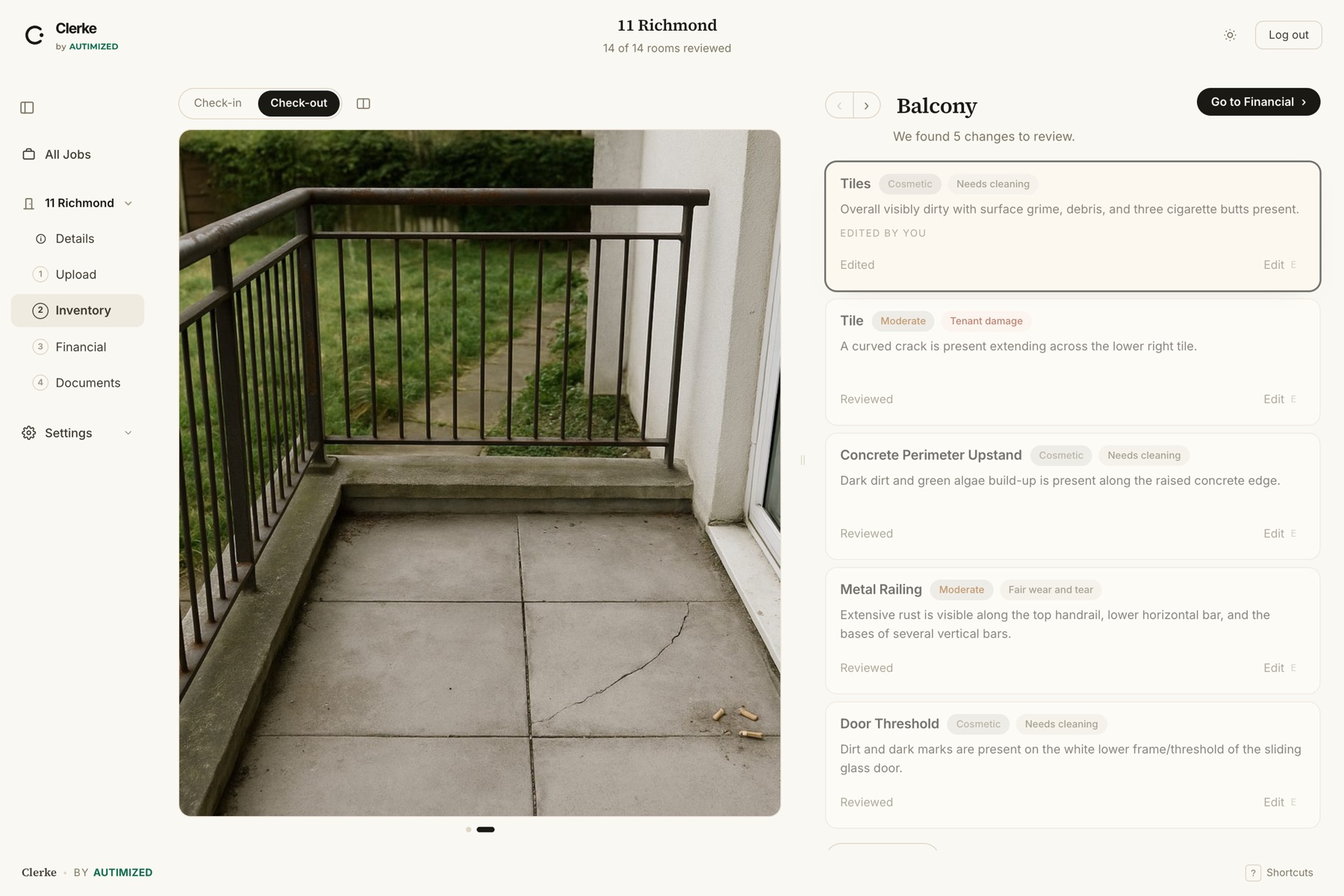
It reads the photos and lists what changed.
A model reads each pair of photos and writes down what is different. A burn. A stain. A door off its hinges. For every one it records the room, what kind of damage it is, how bad, and how old the item was. Then it says tenant damage or fair wear, and why.
None of that is settled. Keep it, change it, or drop it with a reason. Every choice is saved with your name on it.
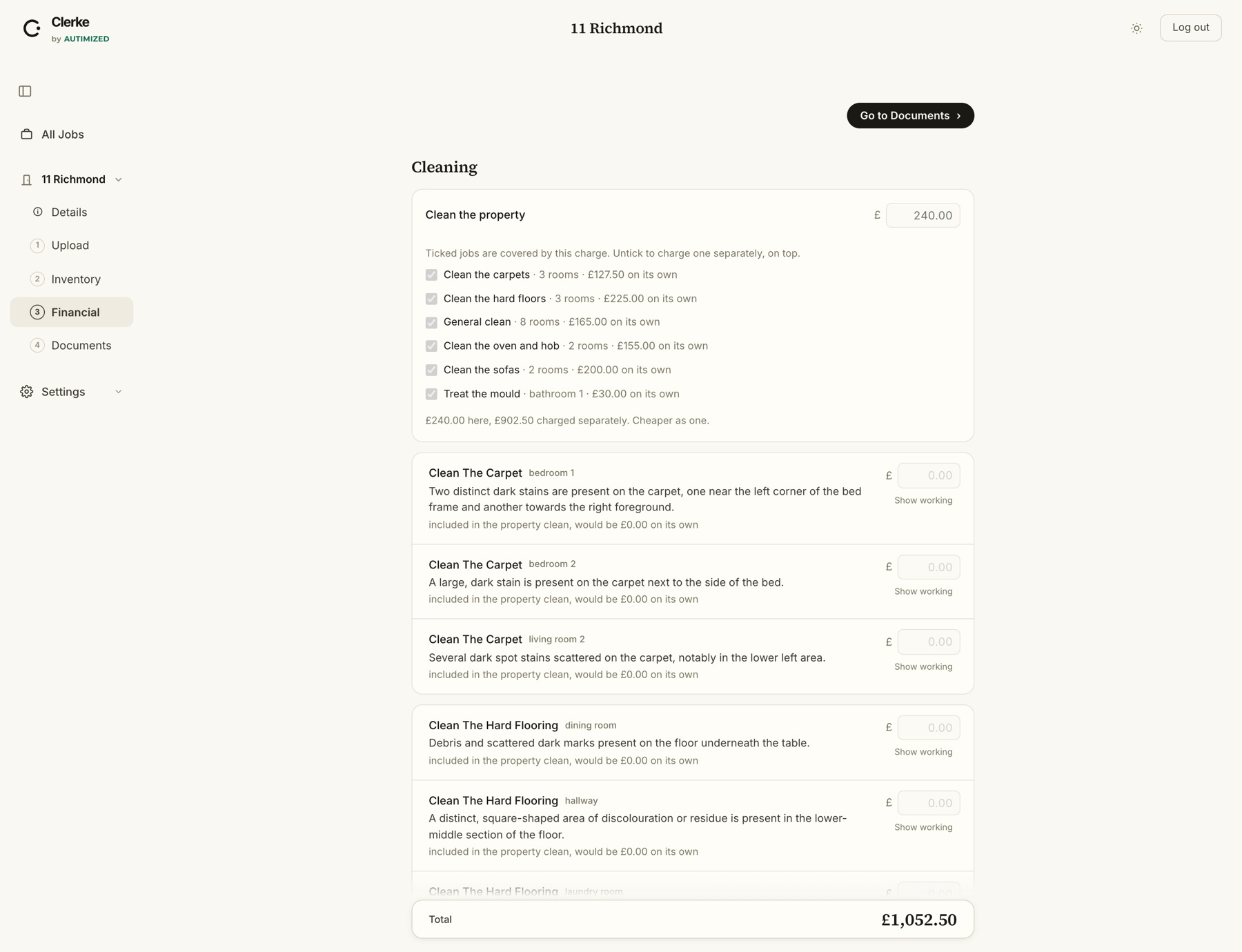
It prices every item, then takes off for age.
Say the carpet costs £385 to replace. It was four years old, and a carpet like that is expected to last ten, so the tenant took six years off it. Clerke charges £231, not £385, and the line shows the sum.
Four cleaning jobs at £45 each comes to £180. One property clean is £140, so Clerke bills the £140 and drops the four lines. Charging less is what a claim that survives looks like.
Nothing goes out until every line has a price you can point at. The total must match the lines under it. Clerke checks that on every job.
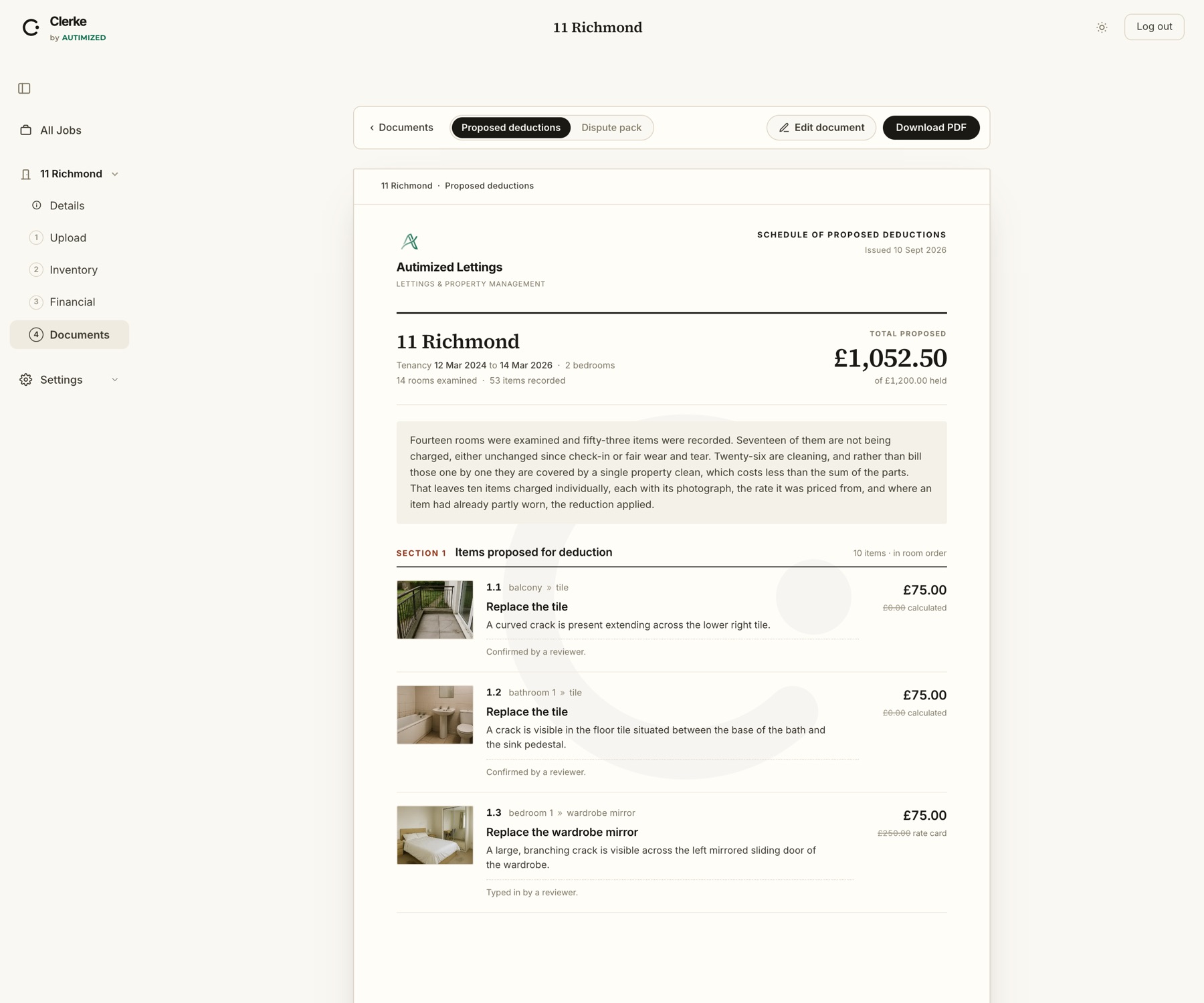
Your documents, on your headed paper.
Every line carries its photo, its price, where that price came from, and what came off for age. The items you looked at and did not charge for are listed too, with the reason. Deductions go to the tenant and the landlord. A dispute pack goes to the scheme if it gets that far.
Your logo. Your rates. Your words. Clerke's name is nowhere on it.
Charging for everything is how you end up with nothing.
Clerke goes through every room. It writes down every issue it can see. A cracked tile. A chipped skirting board. A tap with limescale. Fifty-three on this job.
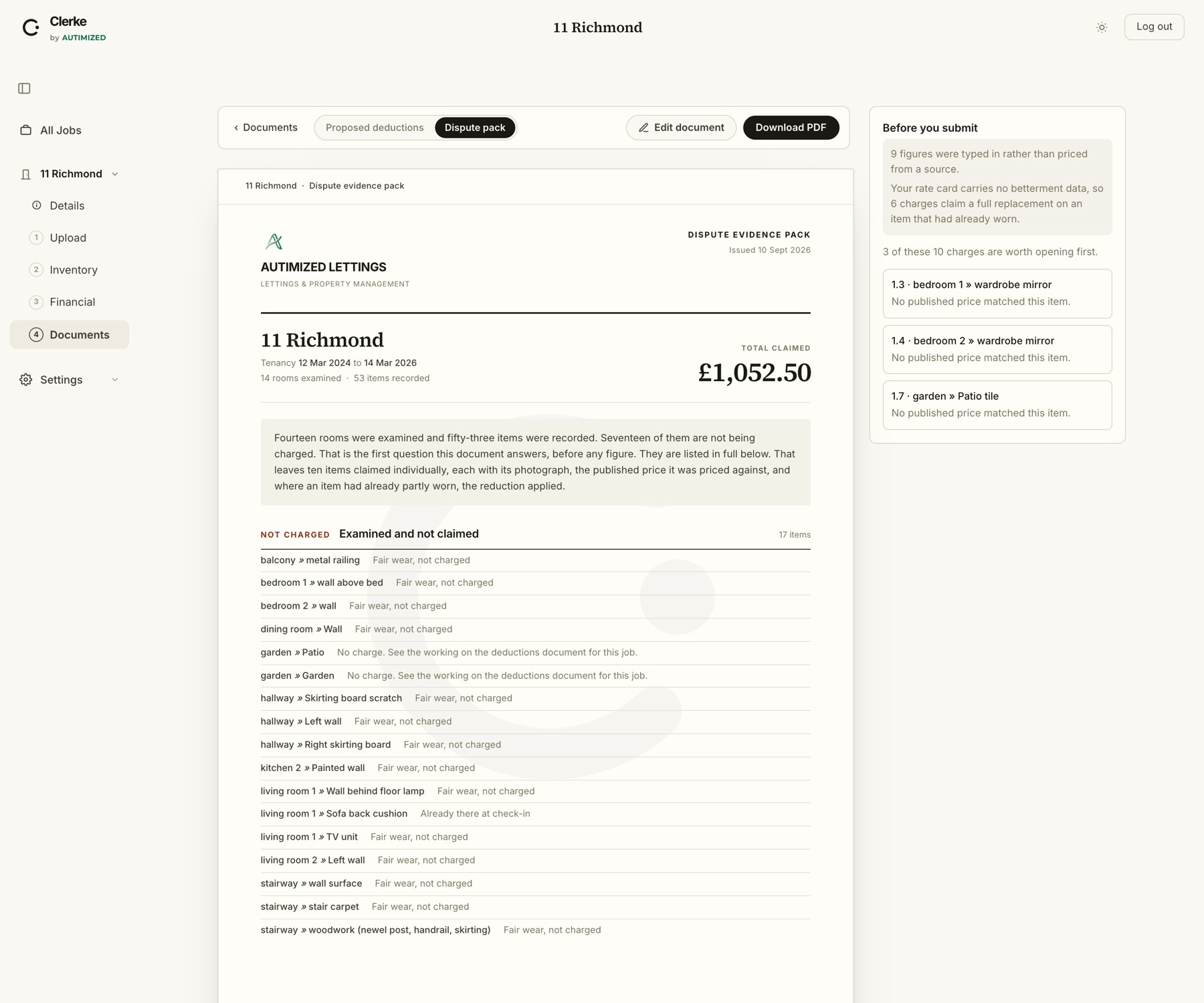
Then it takes most of them off. Seventeen are fair wear, so they cost the tenant nothing. The rest were fine. Ten end up on the claim. Each one has a photo, a price, and where the price came from.
The scheme reads every claim looking for the bit you pushed too far. Here the first thing they see is what you gave back. There is nothing to catch. So they spend the time on your ten.
All fifty-three stay in the pack, charged or not. They can see what you left out.
The questions agencies ask before they say yes.
Is this AI, and is it accurate?
Yes, it is AI. A model looks at the photos and writes the first draft of what changed and what it is worth. It gets a lot right and some wrong. That is why it never has the last word. It drafts, you approve. Nothing goes to a tenant or a landlord until a person signs it off. Every change you make is saved next to the original. The scheme can see what was the software and what was you.
Does it replace our inventory clerk or our staff?
No. Someone still walks the property. Someone still decides what is fair.
Clerke does the rest. It reads every photo. It finds each issue. It splits tenant damage from fair wear. It prices each item from your rate card and takes off for age. Then it writes the documents.
The write-up comes back about three times faster. A small flat can be five times faster. You can send it the same day. The deposit is settled sooner and the flat is back on the market sooner.
And every line on the claim has a source and an age. That is the kind of claim the scheme upholds.
The scheme trusts an independent clerk more. Where does that leave us?
That is true and worth saying. An independent clerk carries weight because they have nothing to gain. What Clerke gives you instead is a full trail: what the model found, what you changed, when, and why. Every figure can be traced back to its photo and its price.
Will the schemes accept it?
It makes a deductions schedule and a dispute pack. Both are built around what the scheme weighs up. The evidence. The age of the item. How long it should last. A price with a source. It works with TDS, DPS and mydeposits. It does not plug into them. It makes the papers they ask for.
What happens to our photos and data?
They sit in a private store that only your workspace can reach. We keep them as long as a claim can still come up, not thirty days. You can ask us to delete a job at any time. The full policy is linked in the footer.
What does it cost?
Nothing to start. Your first five check-outs are free. No card, no contract.
We have not set a price yet. We will work one out with the agencies in the pilot. You can walk away at the end and owe nothing.
Your next five check‑outs, free.
The pilot is free. Five check-outs, then we talk. Your first five, whatever size the property, run through Clerke at no cost. No card. No contract. Nothing to cancel.
You run them yourself. Upload the photos, check the findings, send the documents. It is your account and your jobs. If you want a fair test, run one beside your usual process and compare the two.
All we ask is that you tell us what is missing and what gets in your way. That is what shapes the next version.
We can only take a few agencies right now, because we work closely with each one.